

Introduction
Happy Dad net worth is commonly estimated online at $250 million to $300 million in 2026. However, that range is an estimate, not a confirmed company valuation. Happy Dad is a privately held beverage company, so its exact market value isn’t publicly disclosed.
The company has reported strong recent growth. It sold about 3.55 million cases in 2025, is targeting more than 4.1 million cases in 2026, and has said it is on pace for more than $100 million in 2026 revenue.
It’s also important to distinguish company valuation from personal net worth. A $300 million estimate would refer to the potential value of the business, not the personal wealth of its founders.
What Is Happy Dad’s Net Worth in 2026?

Third-party estimates generally place Happy Dad’s estimated valuation between $250 million and $300 million. Several websites report figures within this range, but they are estimates rather than valuations supported by a public transaction, audited financial statements, or an official company announcement.
Because Happy Dad is privately held, there is no definitive public figure that can be described as its official net worth.
Estimates can also differ because sources use different assumptions. Some may focus on revenue, while others consider growth, distribution, brand strength, or comparable beverage companies. Older estimates may also continue circulating without updated calculations.
For that reason, the $250 million–$300 million range is best treated as a widely reported estimate, not an independently verified valuation.
Happy Dad Net Worth vs. Company Valuation
What Does Company Valuation Mean?
A company valuation is an estimate of what a business may be worth. Factors such as revenue, profitability, growth, assets, market position, and future potential can all influence that value.
For a private company like Happy Dad, there isn’t a public stock price establishing its value every day. Instead, its potential valuation may be assessed using financial performance, comparable companies, private investment activity, and other business benchmarks.
What Does Net Worth Mean?
Net worth usually means the value of a person’s assets minus their liabilities. When people search for a company’s “net worth,” they often mean its estimated value or valuation instead.
That distinction matters when discussing Happy Dad. A company’s estimated valuation shouldn’t automatically be converted into a founder’s personal net worth.
For example, a business valued at $300 million doesn’t mean one founder personally has $300 million. Ownership can be divided among multiple parties, while the company may also have liabilities and other financial obligations.
What Is Happy Dad’s Revenue?
Revenue is the money a company generates from sales before expenses are deducted. It isn’t the same as profit, valuation, or an owner’s personal wealth.
Happy Dad’s CEO said in March 2026 that the company was on pace to generate more than $100 million in revenue during 2026.
That figure helps show the scale of the business, but revenue alone doesn’t prove that Happy Dad is worth $250 million or $300 million.
Happy Dad Financial Snapshot
| Metric | Information |
|---|---|
| Founded | 2021 |
| Co-founders | Sam Shahidi, John Shahidi, Kyle Forgeard |
| CEO | Sam Shahidi |
| Industry | Beverage |
| Company type | Private |
| 2025 case volume | About 3.55 million |
| 2026 case target | More than 4.1 million |
| 2026 revenue outlook | More than $100 million |
| Distributor partners | 258 |
| Estimated valuation | Varies by source |
Happy Dad’s official company information identifies Sam Shahidi, John Shahidi, and Kyle Forgeard as its co-founders, with Sam Shahidi serving as CEO. The company also states that its products are available nationwide across the United States and Canada.
Recent business figures provide more useful context than an unverified valuation alone. Happy Dad reported that its distributor network grew from 76 partners to 258. It also closed 2025 at approximately 3.55 million cases and set a target of more than 4.1 million cases for 2026.
The case volume, revenue outlook, and distributor count are company-reported figures. By contrast, the $250 million–$300 million valuation remains a third-party estimate rather than a confirmed company figure.
- Read More: Leo Skepi Net Worth
Who Owns Happy Dad?
Sam Shahidi
Sam Shahidi is a co-founder of Happy Dad and serves as its CEO. The company’s official history lists him alongside John Shahidi and Kyle Forgeard as part of the founding team that launched Happy Dad in 2021.
He has also represented the company in discussions surrounding distribution, retail expansion, and long-term growth. However, Happy Dad has not publicly disclosed the founders’ individual ownership percentages.
John Shahidi
John Shahidi is a co-founder of Happy Dad and is also closely associated with the broader Full Send and NELK business ecosystem.
While the connection between Happy Dad and the NELK/Full Send world is well established, the exact percentage of Happy Dad owned by individual founders has not been publicly disclosed.
Kyle Forgeard
Kyle Forgeard is a co-founder of Happy Dad and a prominent figure associated with the NELK Boys. His existing online audience gave the beverage brand access to a large community familiar with the people behind it.
Happy Dad’s official About Us information confirms Forgeard’s role as a co-founder.
What Is Known About SteveWillDoIt’s Involvement?
SteveWillDoIt, whose real name is Stephen Deleonardis, is often mentioned in discussions about Happy Dad because of his connection to NELK and Full Send. However, online claims about his direct ownership of Happy Dad vary.
His exact equity position has not been publicly confirmed by Happy Dad. As a result, claims about a specific ownership percentage shouldn’t be presented as fact without reliable documentation.
The same caution applies to claims that all NELK members collectively own the company. Happy Dad officially identifies Sam Shahidi, John Shahidi, and Kyle Forgeard as its 2021 co-founders, but that doesn’t establish the company’s complete current ownership structure.
How Much Revenue Does Happy Dad Make?
Happy Dad’s 2026 Revenue Outlook
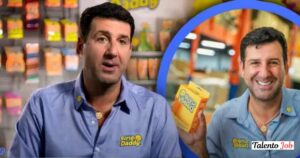
Happy Dad CEO Sam Shahidi said in March 2026 that the company was on pace to generate more than $100 million in revenue during the year.
This is a company-reported outlook, not an independently audited annual result. It therefore provides useful context about the company’s expected scale without establishing its final 2026 revenue.
Happy Dad’s Case Sales
Happy Dad reported approximately 3.55 million cases in 2025 and a target of more than 4.1 million cases in 2026.
Case volume offers another useful measure of the company’s scale because it reflects the amount of product moving through its distribution network.
Distributor and Retail Expansion
Distribution has played a major role in Happy Dad’s recent growth. The company reported increasing its distributor network from 76 partners to 258 across the United States.
Retail availability has expanded as well. In March 2026, Happy Dad announced a nationwide Target launch that added 1,480 points of distribution across 46 states.
How Happy Dad Became So Valuable
The NELK and Full Send Audience
Happy Dad entered the market with something many beverage startups take years to develop: an established audience.
Kyle Forgeard’s connection to NELK and the Shahidi brothers’ involvement with the broader Full Send business gave the brand access to a large digital community. That made it easier to introduce the products to consumers already familiar with the people behind the company.
An established audience doesn’t guarantee sales, but it can reduce the difficulty of reaching potential customers.
Creator-Led Marketing
Happy Dad’s marketing strategy has been closely tied to social media, creator culture, and the personalities behind the brand.
Its approach has included:
- Social media content
- Influencer promotion
- Community engagement
- Founder-led branding
- Collaborations and partnerships
This model gives the brand a distinct identity. Consumers aren’t simply encountering an unfamiliar beverage; they’re seeing a product connected to an established entertainment ecosystem.
Retail Distribution
A large online audience alone isn’t enough to build a national beverage company. Consumers also need to find the product where they shop.
Happy Dad’s expansion from 76 to 258 distributor partners highlights the importance of distribution to its growth strategy.
The brand has also expanded into major retail channels, including Target, where it added 1,480 points of distribution in 2026.
Product Expansion
Happy Dad has expanded beyond its original hard-seltzer focus. Its official company history includes Hard Seltzer Fruit Punch, Happy Mom Raspberry, Death Row Grape, Hard Tea, and Realtree Lemonade among its product developments.
A broader portfolio gives the company more opportunities to reach different consumers and reduces its reliance on a single beverage category.
Happy Dad Products and Brand Expansion
Hard Seltzer
Hard seltzer remains a core part of the Happy Dad brand. The company launched with the goal of creating a hard seltzer featuring a smoother drinking experience and real flavors.
Hard Tea
Happy Dad expanded into Hard Tea in 2025, adding another major ready-to-drink category to its product lineup.
Hard Lemonade
The company has also entered the hard lemonade category with products such as Realtree Lemonade. In 2026, Happy Dad introduced a 5% ABV 12-pack version alongside its existing higher-ABV offering.
Other Collaborations and Product Lines
Happy Dad has used collaborations and new product lines to broaden its reach. Its company history includes the Death Row Grape collaboration with Snoop Dogg as well as later Realtree products.
This diversification can create additional retail opportunities and appeal to consumers who may not prefer traditional hard seltzer.
Happy Dad’s Current Market Position
Happy Dad’s recent performance suggests that its growth extends beyond social-media popularity.
In January 2026, the company said Happy Dad entered Circana’s Top 25 beer brands across all off-premise channels for the first time and added nearly a quarter-million incremental cases during 2025.
The company also reported that Happy Dad ranked among the Top 10 dollar-growth suppliers nationwide for 2025 based on IRI Total U.S. MULO + Convenience data.
In convenience stores, a June 2026 update citing Beer Business Daily and Bump Williams Consulting said Happy Dad ranked No. 2 in beer-manufacturer dollar growth year to date, adding approximately $3.8 million in retail sales during the measured period.
These figures help explain why the brand attracts significant valuation estimates. Still, strong sales growth alone doesn’t establish a specific valuation for a private company.
How Is Happy Dad’s Valuation Estimated?

Revenue Multiples
One common way to assess a consumer company’s potential value is to compare its revenue with valuation multiples used for similar businesses.
For instance, analysts may examine comparable beverage companies and use their revenue-to-valuation relationships as one input when estimating the value of a private brand.
The multiple isn’t universal, though. A fast-growing company with strong distribution may receive a different valuation than a slower-growing business with similar revenue.
Growth Rate
Growth can significantly influence how investors view a business.
Happy Dad’s reported increase in distributor partners, case-volume targets, retail expansion, and 2026 revenue outlook all indicate that the company is still scaling.
However, future growth remains an expectation rather than a guarantee. Projections shouldn’t be treated as completed financial results.
Distribution and Market Position
Distribution can affect a beverage company’s value because national availability gives consumers more opportunities to purchase its products.
Happy Dad’s expansion from 76 to 258 distributor partners, along with its growing retail presence, demonstrates the scale of its distribution strategy.
Brand Equity
Brand equity can add value beyond current sales. Recognition, customer loyalty, creator associations, and demand for new products can all strengthen a consumer brand.
Happy Dad’s connection to NELK and Full Send gives it a distinct cultural identity, while its expanding product range creates additional opportunities to turn that recognition into sales.
Why Online Estimates Differ
The main reason is simple: there is no publicly disclosed valuation that establishes one definitive figure.
Different websites may use different:
- Revenue assumptions
- Valuation multiples
- Growth projections
- Comparable companies
- Publication dates
- Definitions of “net worth”
Some websites may also repeat older estimates without explaining how the original figure was calculated.
That’s why the $250 million–$300 million figure should be treated as a reported estimate, not a confirmed financial fact.
Is Happy Dad Really Worth $300 Million?
The short answer is there isn’t enough public evidence to call $300 million an officially confirmed valuation.
A useful way to evaluate the available information is to separate it into four categories:
| Classification | Meaning |
| Confirmed | Information published directly by Happy Dad, such as founders, products, and reported business milestones |
| Reported | Information published by credible third-party sources |
| Estimated | A calculated or inferred figure, such as a private-company valuation |
| Unverified | Claims repeated online without sufficient supporting evidence |
The $250 million–$300 million range belongs in the estimated category. Third-party websites report figures within this range, but Happy Dad hasn’t publicly announced an independently verified valuation at that level.
At the same time, the company’s reported case volume, distributor expansion, and revenue outlook provide credible evidence that Happy Dad has grown into a sizable beverage business.
So rather than presenting $300 million as a proven fact, it’s more accurate to say that Happy Dad’s estimated value is often placed around $250 million to $300 million, while its exact valuation remains private.
Happy Dad Company Timeline
2021: Happy Dad was co-founded by Sam Shahidi, John Shahidi, and Kyle Forgeard.
2022: The company added Hard Seltzer Fruit Punch to its lineup.
2023: Happy Dad expanded its product range with Happy Mom Raspberry and Death Row Grape.
2025: The company introduced Hard Tea and Realtree Lemonade products. It also closed the year at approximately 3.55 million cases.
2026: Happy Dad targeted more than 4.1 million cases, expanded its distributor network to 258 partners, and said it was on pace for more than $100 million in revenue.
Frequently Asked Questions About Happy Dad Net Worth
What is Happy Dad’s net worth in 2026?
Third-party websites commonly estimate Happy Dad’s value at around $250 million to $300 million, but the company hasn’t publicly confirmed an official valuation.
How much is Happy Dad worth?
The most frequently reported estimate is $250 million–$300 million. Because Happy Dad is privately held, its exact value cannot currently be verified through public financial statements.
Who owns Happy Dad?
Happy Dad officially identifies Sam Shahidi, John Shahidi, and Kyle Forgeard as its co-founders. The company’s complete current ownership percentages aren’t publicly disclosed.
Who founded Happy Dad?
Happy Dad was co-founded in 2021 by Sam Shahidi, John Shahidi, and Kyle Forgeard.
How much revenue does Happy Dad make?
Happy Dad’s CEO said the company was on pace for more than $100 million in 2026 revenue. That’s a company-reported outlook rather than a completed audited annual result.
Is Happy Dad worth $300 million?
$300 million is a widely reported estimate, but it isn’t a publicly confirmed valuation. The exact value of the private company remains undisclosed.
Does SteveWillDoIt own Happy Dad?
SteveWillDoIt’s connection to the NELK and Full Send ecosystem is well documented, but his exact direct equity stake in Happy Dad hasn’t been publicly confirmed by the company.
How did Happy Dad become successful?
The brand combined an established creator audience with social-media marketing, product development, expanding distribution, and retail partnerships.
Is Happy Dad publicly traded?
No. Happy Dad is a privately held company, which limits the amount of financial information available to the public.
What products does Happy Dad sell?
Its portfolio includes hard seltzer, Hard Tea, and Hard Lemonade, along with collaborations and other product lines.
Final Verdict: How Much Is Happy Dad Really Worth?
The best-supported answer is that Happy Dad’s estimated valuation is commonly reported at $250 million to $300 million in 2026, but that range isn’t an officially disclosed or independently audited company valuation.
The company’s underlying growth is easier to verify. Happy Dad reported roughly 3.55 million cases in 2025, a target of more than 4.1 million cases in 2026, 258 distributor partners, and a company-reported 2026 revenue outlook above $100 million.
These figures help explain why Happy Dad attracts substantial valuation estimates while also showing why the exact number should be treated cautiously. Its founders, creator-led marketing, expanding distribution, and growing product portfolio have helped build a significant beverage business. However, company value and founder net worth are not the same thing.

Discover the best captions for Instagram, Facebook, TikTok, and more at Talento Job. Explore funny, cute, motivational, love, attitude, and trending captions to make every post stand out.